


Contact Us
Please contact us using the form below. We will get back to you as quickly as possible. You can also email us at info@bjitgroup.com.


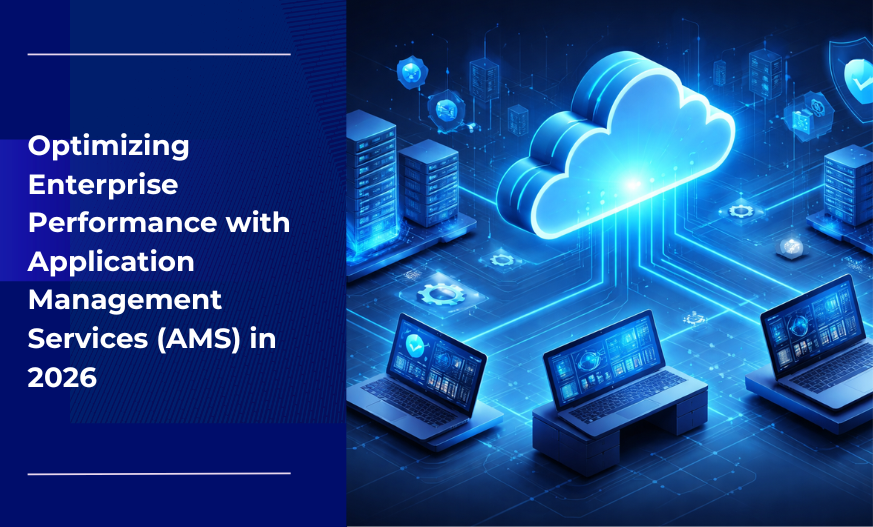
In today’s digital landscape, organizations rely on multiple interconnected applications to manage operations, customer interactions, and internal workflows. As these systems grow in complexity, managing them manually or through fragmented tools becomes inefficient and error-prone. This has led to the rise of Application Management Systems (AMS)—centralized platforms designed to monitor, manage, and optimize enterprise applications in real time.
According to Gartner, organizations that adopt structured application management practices can reduce IT operational costs by up to 30% while improving system reliability. Additionally, IDC reports that over 60% of enterprises are investing in centralized application management platforms to enhance visibility and performance across digital ecosystems.
An effective Application Management System enables organizations to automate workflows, monitor performance, ensure security, and maintain compliance—all from a unified interface. For modern enterprises, adopting such systems is essential to achieving operational efficiency and scalability.

Despite the benefits, organizations face several challenges when implementing and managing Application Management Systems:
Complex Multi-System Environments
Enterprises operate across multiple platforms, including ERP, CRM, cloud applications, and legacy systems. Managing these systems without integration leads to inefficiencies.
Lack of Real-Time Visibility
Without centralized monitoring, detecting performance issues or failures becomes difficult, leading to delayed response times.
Manual Process Dependencies
Manual tracking of application performance, incidents, and updates increases the risk of human error and operational delays.
Security and Compliance Risks
Applications handling sensitive data must meet strict regulatory standards. Lack of proper monitoring can expose systems to vulnerabilities.
Scalability Constraints
As organizations grow, application ecosystems expand. Systems must scale without performance degradation.
Inefficient Resource Utilization
Poor system management leads to underutilized resources and increased operational costs.
These challenges highlight the need for intelligent, automated, and scalable Application Management Systems.
Modern Application Management Systems address these challenges through advaned features and automation:
Centralized Monitoring and Control
A unified dashboard provides real-time visibility into application performance, system health, and operational metrics.
Automated Workflow Management
Automation of routine tasks such as updates, incident tracking, and reporting reduces manual effort and improves efficiency.
Performance Optimization
Continuous monitoring and analytics help identify bottlenecks and optimize application performance.
Security and Compliance Management
Integrated security tools ensure regular updates, vulnerability detection, and compliance with global standards.
Integration Capabilities
Seamless integration with existing enterprise systems ensures smooth data flow and operational consistency.
Scalable Architecture
Modern AMS platforms are designed to scale with business growth, supporting increasing workloads and users.
BJIT enhances Application Management Systems by providing comprehensive development, integration, and support services tailored to enterprise needs.
System Design & Development
BJIT designs scalable and secure AMS platforms using modern technologies, ensuring high performance and flexibility.
Integration Services
Seamless integration with ERP, CRM, cloud platforms, and third-party applications ensures unified operations.
Automation & Workflow Optimization
BJIT implements automation strategies to streamline processes, reduce errors, and improve operational efficiency.
Monitoring & Analytics
Advanced monitoring tools and dashboards provide actionable insights into system performance and usage.
Maintenance & Support
Continuous system monitoring, updates, and support ensure long-term stability and reliability.
Scalable Architecture
BJIT builds modular systems that can grow with the organization, supporting future expansion and innovation.

As enterprise systems continue to grow in complexity, organizations must adopt smarter solutions to manage their application ecosystems effectively. Application Management Systems provide a centralized, automated, and scalable approach to monitoring and optimizing applications.
By leveraging BJIT’s expertise in system design, integration, automation, and support, organizations can transform their application management processes into a strategic advantage. With improved visibility, enhanced security, and optimized performance, BJIT-powered Application Management Systems enable businesses to operate more efficiently and scale confidently in a digital-first world. Partner with BJIT to build intelligent, scalable, and future-ready Application Management Systems for your enterprise.