






Contact Us
Please contact us using the form below. We will get back to you as quickly as possible. You can also email us at info@bjitgroup.com.


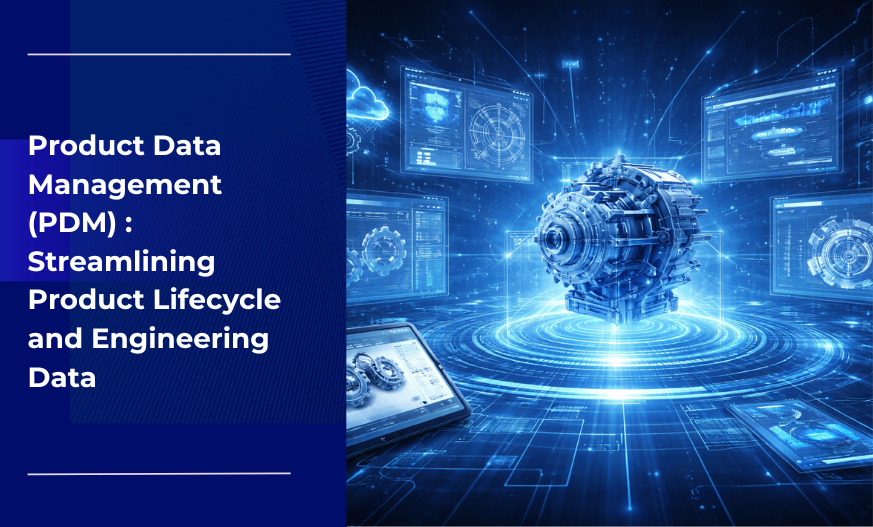
In today’s fast-paced manufacturing and engineering landscape, managing product data efficiently is critical for innovation, speed, and competitiveness. Organizations generate vast amounts of product-related data—from design files and CAD models to bills of materials (BOM) and engineering change records. Without a structured system, this data becomes fragmented, leading to inefficiencies, errors, and delays.
Product Data Management (PDM) systems provide a centralized platform to store, manage, and track product data throughout its lifecycle. These systems enable collaboration across teams, ensure version control, and improve data accuracy.
According to MarketsandMarkets, the global Product Lifecycle Management (PLM) market—which includes PDM—is expected to reach over $40 billion by 2027, driven by digital transformation in manufacturing. Additionally, Aberdeen Group reports that companies using PDM/PLM systems achieve up to 25% faster product development cycles.
As organizations move toward Industry 4.0, adopting robust PDM solutions is essential for maintaining data integrity, improving collaboration, and accelerating innovation.

Despite its importance, many organizations struggle with managing product data effectively.
Fragmented Data Source
Product data is often stored across multiple systems and departments, leading to inconsistencies and duplication.
Lack of Version Control
Without proper version management, teams may work on outdated files, resulting in costly errors.
Inefficient Collaboration
Engineering, design, and production teams often lack a unified platform, slowing down decision-making.
Manual Processes
Manual tracking of changes, approvals, and updates increases errors and delays.
Security and Access Control
Sensitive product data must be protected while still being accessible to authorized users.
Scalability Issue
As product portfolios grow, managing increasing volumes of data becomes more complex.
According to PwC, inefficient data management can reduce operational productivity by up to 20%, highlighting the importance of structured systems like PDM.
Modern PDM systems address these challenges by providing structured, automated, and scalable solutions.
Centralized Data Repository
A single source of truth ensures all stakeholders access accurate and up-to-date product data.
Version Control and Change Management
Automated version tracking and change workflows prevent errors and maintain data integrity.
Workflow Automation
Automated approval processes streamline engineering changes and reduce delays.
Collaboration Enablement
Cross-functional teams can collaborate in real time, improving efficiency and innovation.
Security and Access Management
Role-based access ensures data security while maintaining usability.
Integration with PLM and ERP Systems
Seamless integration with enterprise systems enables end-to-end product lifecycle management.
BJIT delivers advanced PDM solutions that help organizations manage product data efficiently and scale operations.
PDM System Development and Customization
BJIT designs and customizes PDM solutions tailored to specific industry requirements.
Integration Services
Integration with PLM, ERP, CAD systems, and cloud platforms ensures seamless data flow.
Data Migration and Management
BJIT supports migration from legacy systems to modern PDM platforms while maintaining data integrity.
Workflow Automation
Automation of engineering processes improves efficiency and reduces manual effort.
Quality Assurance and Validation
Rigorous testing ensures system reliability, performance, and security.
Scalable Architecture
BJIT builds modular PDM systems capable of supporting growing data volumes and users.
With strong expertise in engineering and enterprise systems, BJIT enables organizations to optimize product data management and accelerate innovation.

As product complexity increases and time-to-market becomes more critical, organizations must adopt efficient systems to manage product data. Product Data Management (PDM) provides the foundation for structured, secure, and scalable data handling across the product lifecycle.
With BJIT’s expertise in system development, integration, and automation, organizations can transform their product data processes into a strategic advantage. By implementing modern PDM solutions, businesses can improve collaboration, reduce errors, and accelerate product development. Partner with BJIT to build a robust, scalable, and future-ready Product Data Management system for your enterprise.