

Contact Us
Please contact us using the form below. We will get back to you as quickly as possible. You can also email us at info@bjitgroup.com.


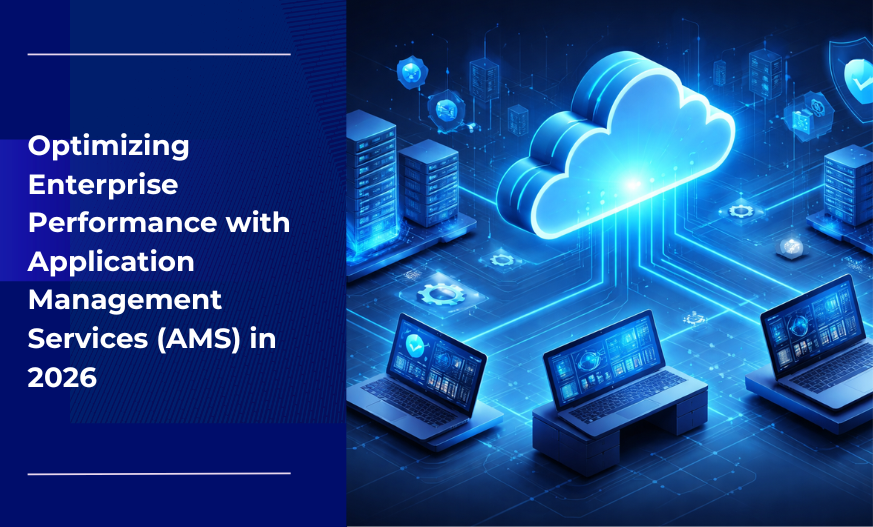
Modern enterprises rely heavily on complex software ecosystems to run daily operations, manage customer relationships, and drive digital transformation. As organizations adopt cloud platforms, enterprise applications, and integrated digital systems, managing these applications effectively becomes critical to maintaining operational stability and business continuity.
Application Management Services (AMS) provide organizations with a structured approach to maintaining, optimizing, and continuously improving enterprise applications. These services ensure that software systems operate efficiently, securely, and without disruption.
According to Gartner, global IT spending is expected to reach over $6.2 trillion in 2026, with a significant portion allocated to application services and managed IT operations. Meanwhile, IDC reports that more than 65% of enterprises are increasing investments in managed services to improve system performance and reduce operational risk. However, managing enterprise applications internally can be challenging due to increasing system complexity, integration requirements, and evolving security threats. This is where structured AMS solutions become essential.

Organizations often face several operational challenges when managing enterprise applications without a structured AMS strategy.
Complex Application Ecosystems
Modern enterprises operate multiple interconnected systems including ERP, CRM, analytics platforms, and custom applications. Managing these systems without centralized governance can lead to inefficiencies and operational disruptions.
Increasing System Downtime Risk
Unmonitored or poorly maintained applications may cause unexpected downtime, which directly affects productivity and customer experience.
Performance and Scalability Issues
As businesses grow, applications must handle increasing workloads. Without proper performance optimization, systems may slow down or fail to scale efficiently.
Security and Compliance Concerns
Applications often handle sensitive data, making them prime targets for cyber threats. Poor patch management and outdated software can expose organizations to compliance violations and security breaches.
Rising Maintenance Costs
Managing application updates, bug fixes, and infrastructure internally can significantly increase operational costs and strain IT teams.
Limited Visibility and Monitoring
Without proper monitoring tools and analytics, identifying system issues before they escalate becomes difficult.
According to Deloitte’s Global Outsourcing Survey, nearly 70% of organizations outsource IT services to improve efficiency and reduce operational costs, highlighting the growing importance of managed application services.
Application Management Services help organizations overcome these challenges by providing proactive support, system optimization, and continuous monitoring.
Proactive Application Monitoring
Real-time monitoring ensures that system performance issues are identified and resolved before they impact business operations.
Incident and Problem Management
Structured ticketing and incident response frameworks enable faster troubleshooting and resolution of system issues.
Performance Optimization
Regular performance analysis and tuning improve application efficiency and scalability.
Security and Patch Management
Continuous updates, vulnerability assessments, and patch deployments help maintain system security and regulatory compliance.
Application Upgrades and Enhancements
AMS ensures that applications remain up to date with the latest features and technological advancements.
Continuous Improvement and Innovation
Through analytics and performance insights, organizations can continuously optimize their applications to support evolving business needs.
BJIT provides comprehensive Application Management Services designed to ensure enterprise applications remain reliable, secure, and scalable.
Application Monitoring and Support
BJIT offers proactive monitoring and issue resolution to ensure business-critical applications operate without interruption.
Incident and Problem Management
Structured workflows allow quick identification and resolution of system issues, minimizing downtime.
System Maintenance and Updates
Regular updates, patch management, and performance optimization help maintain system reliability.
Integration and Customization Support
BJIT assists organizations in integrating applications across enterprise systems while supporting customization requirements.
Scalable Support Models
Organizations can choose flexible support models including:
Through these services, BJIT helps enterprises maintain application performance while enabling long-term digital transformation.

With BJIT-enabled AMS, organizations can maintain stable operations while focusing internal resources on strategic innovation.
As digital ecosystems grow increasingly complex, organizations must ensure that their enterprise applications remain reliable, secure, and optimized for performance. Without proper management, application downtime, security vulnerabilities, and operational inefficiencies can significantly impact business outcomes.
Application Management Services provide a structured approach to maintaining and enhancing enterprise systems while reducing operational risk.
With BJIT’s expertise in application monitoring, incident management, system optimization, and scalable support models, organizations can ensure their applications operate efficiently while enabling long-term digital growth.
By partnering with BJIT, enterprises can transform application management into a strategic capability that supports innovation, resilience, and sustainable business success.