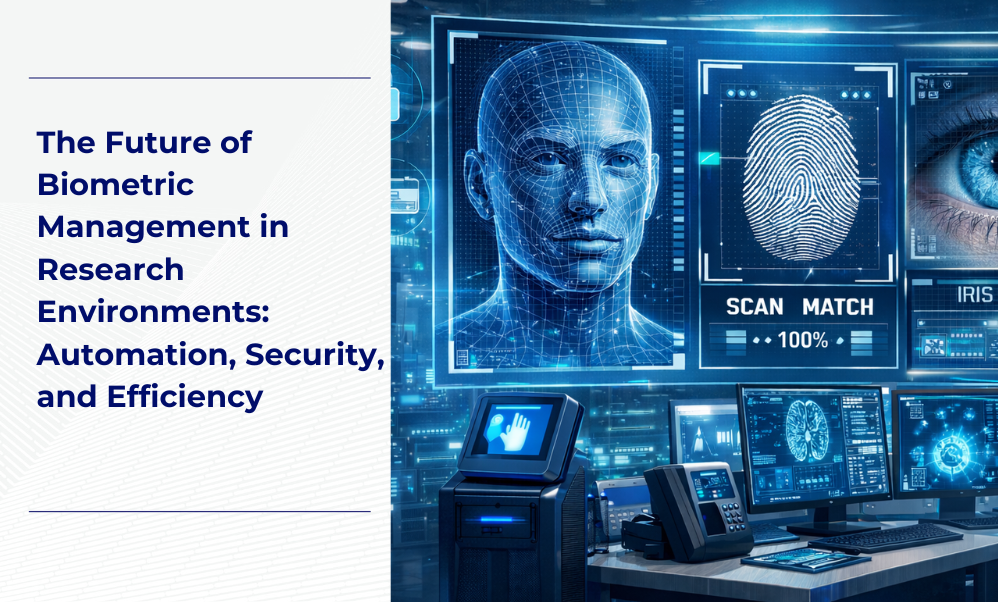
The world of scientific research is evolving rapidly, and laboratories today are more interconnected and data-driven than ever. Biometric Management Systems (BMS) have emerged as a critical technology in research environments, enabling precise monitoring of processes, materials, and experiments. These systems allow scientists to conduct research efficiently while ensuring data integrity, compliance, and operational security. By integrating both web-based and desktop applications along with robust databases, BMS streamlines workflows, reduces errors, and enhances productivity in complex research settings.
As laboratories increasingly handle sensitive experiments and diverse materials, adopting a sophisticated BMS becomes not just an option, but a necessity. The implementation of such systems can transform ordinary labs into smart, automated environments where data is meticulously tracked, processes are standardized, and outcomes are optimized.
Despite the advantages, laboratories face several challenges when implementing and managing BMS:
- Complex Data Management – Research labs deal with large volumes of experimental data from multiple sources. Without proper systems, managing this data efficiently becomes a challenge.
- Process Monitoring – Tracking multiple simultaneous experiments, sample movements, and material usage manually can lead to errors and delays.
- Integration Issues – Many labs operate with diverse software and hardware. Integrating a BMS with existing systems is often complicated.
- Security and Compliance – Sensitive research data requires high-level security measures. Non-compliance can have serious legal and operational consequences.
- Scalability – As research expands, systems must accommodate growing volumes of data, users, and experiments without performance degradation.
- User Experience – Complex interfaces or poorly designed systems can hinder adoption among lab staff, slowing down research operations.
Modern Biometric Management Systems can address these challenges through the following solutions:
- Centralized Data Management – Web and desktop applications combined with databases like MySQL and SQLite ensure all research data is centralized, easy to access, and secure.
- Process Automation – Automating workflows such as material tracking, experiment monitoring, and reporting reduces manual errors and increases productivity.
- Advanced Reporting & Analytics – Dashboards and automated reports provide insights into lab activities, enabling faster and more accurate decision-making.
- System Integration – Seamless integration with existing lab hardware and software ensures a unified operational environment.
- User-Centric Design – Intuitive interfaces with clear data visualization allow scientists to monitor and manage experiments effortlessly.
- Scalable Architecture – Modular systems grow with the lab’s needs, accommodating more users, experiments, and data volumes over time.
BJIT excels in elevating BMS for research laboratories by providing a comprehensive suite of services:
- UI/UX Prototyping – Creating intuitive interfaces that improve adoption and usability.
- Architecture Design & Estimation – Structuring scalable, efficient, and secure BMS architectures for both web and desktop applications.
- Project Management – Ensuring timelines, resources, and deliverables are efficiently managed.
- Development – Utilizing technologies like PHP, CakePHP, Composer, C#, .NET Framework, MySQL, and SQLite to build robust applications.
- Quality Control – Continuous testing, validation, and improvements to guarantee error-free, compliant, and high-performing BMS operations.
- BJIT’s end-to-end services ensure research labs not only implement BMS but also optimize it for operational excellence, secure workflows, and scalable growth.
Here’s a conceptual chart to illustrate the difference between a traditional lab workflow and an enhanced BMS workflow with BJIT’s support: 
With traditional lab methods, errors, inefficiencies, and delayed insights are common. Advanced BMS workflows with proper architecture, development, and quality control streamline the entire research process, ensure compliance, and provide actionable insights in real-time.
The landscape of scientific research is evolving, and laboratories can no longer rely on outdated systems for managing experiments, materials, and data. Biometric Management Systems (BMS) offer a revolutionary approach to streamline research processes, enhance security, and improve productivity. For organizations seeking to modernize their research environment and embrace next-generation BMS, partnering with a trusted expert ensures seamless integration, secure operations, and scalable solutions. Unlock the full potential of your research labs today by implementing a robust BMS solution tailored to your needs. Contact BJIT to transform your laboratory into a smart, efficient, and future-ready research hub.
- Jain, A., Ross, A., & Nandakumar, K. (2011). Introduction to Biometrics. Springer.
- Maltoni, D., Maio, D., Jain, A., & Prabhakar, S. (2009). Handbook of Fingerprint Recognition (2nd ed.). Springer.
- Ratha, N. K., Connell, J. H., & Bolle, R. M. (2001). Enhancing security and privacy in biometrics-based authentication systems. IBM Systems Journal, 40(3), 614–634. https://doi.org/10.1147/sj.403.0614
- ISO/IEC 19794-1:2011. Information technology — Biometric data interchange formats. International Organization for Standardization.
- Ross, A., & Jain, A. K. (2003). Information fusion in biometrics. Pattern Recognition Letters, 24(13), 2115–2125. https://doi.org/10.1016/S0167-8655(03)00126-0